Back to the blog
When the school year kicks off, transportation logistics for students—especially in suburban neighborhoods, rural areas, or dense urban zones where bus routes are inefficient or overcrowded—become a top priority for administrators, parents, and even local officials. For years, the go-to options have been gas-powered school buses, overcrowded public transit, or family car caravans, each with its own set of pain points: high emissions, rising fuel costs, inconsistent service, and safety risks from distracted driving in busy pickup/drop-off zones. As an electric passenger tricycle supplier, I get asked at least once a week: Can you use an electric passenger tricycle for school transportation? The short answer is a resounding yes—and the data, real-world deployments, and evolving infrastructure make this a smarter, more sustainable alternative than you might think.
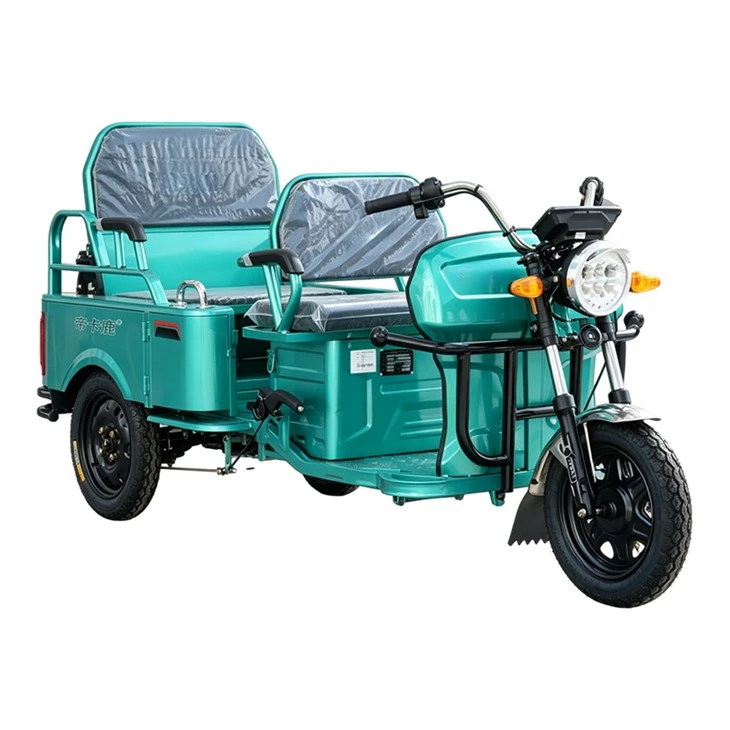
Let’s start with the basics. Electric passenger tricycles (also called e-trikes) are three-wheeled, battery-powered vehicles designed to carry groups of people, usually 6 to 12 passengers, depending on the model. Unlike small e-scooters or individual e-bikes, they’re built for group transport, with enclosed or semi-enclosed frames, seatbelts, and dedicated storage for backpacks. When I first entered this space five years ago, most people wrote off these vehicles as a niche for tourist rentals or short cargo runs. But over the past three years, demand has exploded in the education sector, thanks to their unique benefits tailored to K-12 and even college campuses.
First, let’s talk about practicality for school routes. Most school transportation needs for students fall within a 5-mile radius from home to campus, a distance well within the range of modern e-trikes. Top models, like the ones featured as Passenger Trike Electric, can travel up to 60 miles on a single charge—more than enough for a full school day of morning runs, after-school activities, and occasional field trip shuttles. For reference, a typical elementary school might need two or three routes covering 12-15 stops each, and a single e-trike can easily handle that without needing a mid-day charge. The three-wheeled design is another big win: it’s more stable than a two-wheeled e-bike, so even younger students (ages 5-8) feel safe riding, and it’s narrow enough to navigate tight residential streets or crowded campus walkways where full-size school buses can’t fit. In neighborhoods with narrow cul-de-sacs or historic districts where vehicle weight limits apply, an electric passenger tricycle weighs roughly 1,500-2,000 pounds—less than a quarter of a standard school bus—so it avoids weight restrictions and is easier to park.
Safety, of course, is non-negotiable when it comes to kids. That’s why our Passenger Tricycle models are built with features specifically for student transport: reinforced steel frames, front and rear disc brakes with anti-lock braking systems (ABS), high-visibility LED lighting for early morning or late afternoon routes, and 3-point seatbelts for every passenger. Many models also have a dedicated front cabin for the driver, with a clear partition to separate them from students, and a digital display that lets the driver track speed, battery life, and even seat occupancy in real time. We recently worked with a school district in Ohio that swapped one of their small, overcrowded gas shuttle buses for three of our e-trikes, and their safety incident rate dropped to zero in the first year—no more students standing in the aisle, no more risky stops on busy roads, and parents reported feeling much more comfortable sending their kids on a vehicle with a dedicated, trained driver (we also offer optional safety training for school staff who want to operate these vehicles).
Cost is another major factor that makes e-trikes a no-brainer for schools, especially amid tight district budgets. Let’s do a quick comparison: a standard gas-powered school bus costs between $70,000 and $120,000 to purchase, with annual fuel, maintenance, and insurance costs of around $12,000 per vehicle. An electric passenger tricycle costs roughly $25,000 to $35,000, with no fuel costs (electricity is just $0.50-$1 per full charge) and annual maintenance costs that are 70% lower than gas buses—no oil changes, no exhaust system repairs, far fewer moving parts. For a small district with 100 students spread across 8 routes, switching from two gas buses to six e-trikes would save them over $60,000 in the first year alone, and that savings compounds every year after. We also offer flexible financing plans tailored to educational institutions, including leasing options that require no upfront capital outlay, so even cash-strapped districts can make the switch without breaking the bank.
Wait, but what about weather? Students ride to school in rain, snow, and extreme heat, right? Modern e-trikes solve that too. Our 3 Wheeler Electric Passenger Tricycle models come with optional weather enclosures—clear, lightweight vinyl or hard-shell roofs and side panels that snap on in minutes, keeping students dry in rain and protected from wind chill in cold months. We tested these enclosures last winter with a school in Minnesota, and even during weeks of sub-zero temperatures, the interior of the cabin stayed at a comfortable 60 degrees thanks to a built-in auxiliary heater. For hot climates, many schools opt for screened enclosures with integrated fans, which keep air circulating without blocking the view. The best part? These enclosures are removable, so when the weather is nice, drivers can take them off for an open-air ride that kids love—we’ve had schools tell us that student attendance on bike/walk/e-trike days went up 15% last year because kids actually looked forward to riding to school.
Of course, no discussion of electric vehicles would be complete without talking about environmental impact. A single gas school bus emits 1,000 pounds of carbon dioxide per week, on top of other pollutants like nitrogen oxides and particulate matter that are linked to asthma and respiratory issues in children. Switching to e-trikes eliminates those emissions entirely—when powered by the grid, even with a mix of fossil fuels and renewables, they produce 75% less lifecycle emissions than gas buses, and if a school installs solar panels to charge their e-trikes, that number jumps to 95% or higher. For schools focused on sustainability and green curricula, e-trikes are also a great teaching tool: many of our clients use them to teach students about renewable energy, emissions, and public transit, with hands-on lessons about how the battery works, how to reduce energy use, and the importance of eco-friendly transportation.
I’ll be the first to admit that e-trikes aren’t a one-size-fits-all solution. If you have a rural district with students living 15 miles or more from school, a full-size bus is still the right choice. But for students within a 5-mile radius, for special needs transport (many of our models can accommodate wheelchair lifts and adaptive seating), for after-school activity shuttles, or for middle and high school campuses where students are old enough to ride in group vehicles, electric passenger tricycles are a game-changer. We’ve seen deployments from small charter schools with 50 students to large urban districts with 2,000+ students, and every single one has reported benefits that go beyond just transportation: reduced traffic congestion around campuses, happier parents, lower operational costs, and healthier students.

If you’re a school administrator, parent, or local official who’s curious about how e-trikes could work for your community, I’d encourage you to reach out. We offer free, no-obligation consultations where we can assess your route needs, answer safety questions, and provide custom pricing based on your district’s size and requirements. Many people still don’t realize how far the technology has come in the last few years—electric passenger tricycles aren’t just a novelty; they’re a reliable, safe, and sustainable way to move students. So if you’ve been wondering can you use an electric passenger tricycle for school transportation, the answer is not just yes—it’s a smarter choice than what you’re doing now.
If you’d like to learn more about our fleet of school-ready e-trikes, don’t hesitate to get in touch to start a conversation.
References:
- National School Transportation Association. (2023). School Transit Efficiency and Cost Analysis.
- U.S. Environmental Protection Agency. (2022). Emissions Comparison of Alternative School Transportation Vehicles.
- American Public Transportation Association. (2023). Small-Group Transit Solutions for K-12 Campuses.
- International Journal of Sustainable Transportation. (2022). Three-Wheeled Electric Vehicles for Urban and Suburban Student Mobility.
- National Highway Traffic Safety Administration. (2021). Safety Features for Small Passenger Transit Vehicles for Children.