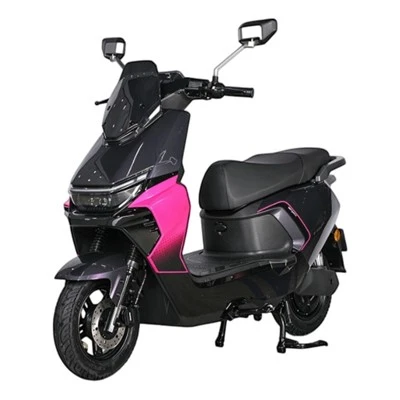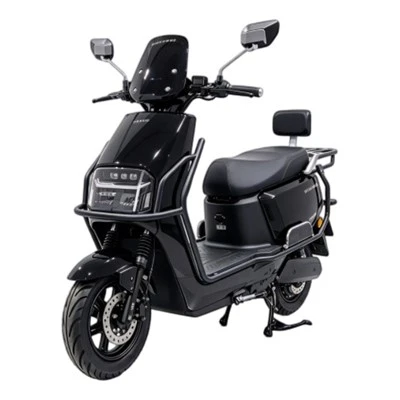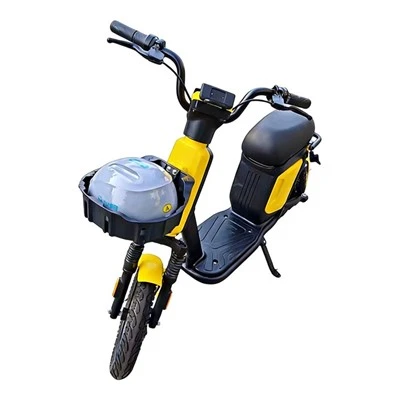
When I started selling Electric Commercial Vehicle Two Wheeler for small business owners and delivery fleets, one question popped up more than any other: Can I charge my two-wheeler at home? As someone who’s worked alongside delivery drivers, e-commerce operators, and local shop owners for three years now, I get it—home charging feels like a game-changer (no more trekking to public charging hubs at 2 a.m. to top off last-minute deliveries) but also leaves people wondering about safety, time, and whether their home’s setup can even handle it. Let me break this down like I do with every customer who walks into my shop, no jargon, no sales fluff, just real answers.
First, the short answer: Yes, most electric commercial two-wheelers can charge at home—if you do it right. But before you grab a charger and plug in, there are a few key details that separate a safe, convenient home charge from a hassle (or even a small risk). Let’s start with what makes home charging work, specifically for the units I sell. For context, all our models—including the 2 Wheel Motorized Scooter for Adults, the Moped For Commuting, and our top-tier City Commuter Electric Moped—use standardized 48V or 60V lithium-ion battery packs, same as most consumer electric two-wheelers. That means they’re not the high-voltage, industrial-grade units reserved for heavy trucks; they’re designed to plug into a regular home outlet without specialized hardware.
Wait, let’s clarify that last part. “Regular home outlet” is key here. Most households in North America have 120V outlets (the standard ones you use for a laptop or a microwave), and many newer builds have 240V outlets for dryers or EVs. For our chargeable two wheeler models, a 120V Level 1 charger (the one that comes included with every unit we sell) works perfectly for overnight charging. Let’s do the math: a standard 1,000 Wh battery (common for commercial two-wheelers) takes roughly 8–10 hours to charge fully on a 120V outlet. For drivers who wrap up their routes by 8 p.m. and need a full charge for the next day, that’s ideal—no need for fancy upgrades. The 2 Wheel Motorized Scooter for Adults, for example, has a 1,200 Wh battery that’ll be ready to go by 6 a.m. if you plug it in when you get home.


But what if you’re running a side hustle that needs your two-wheeler midday? I get it—last-minute grocery deliveries or errand runs can turn into a last-minute charge. That’s where Level 2 chargers (the 240V ones) come in. A Level 2 charger cuts that charge time in half: a 1,000 Wh battery will top off in 3–4 hours, which works if you can plug in during a lunch break at home. Here’s the good news: you don’t need a professional EV setup for that. If you already have a 240V outlet for a dryer or a water heater, you can use a portable Level 2 adapter (most of our commercial models are compatible) that you plug into that outlet, no hardwiring required. I always tell customers to check their existing outlets first—many homes already have the capacity, so you won’t have to spend a few hundred dollars on a new electrical panel upgrade.
Now, let’s talk about safety, because that’s the big concern for anyone plugging in a commercial vehicle at home. Lithium-ion batteries, while reliable, can overheat if they’re charged incorrectly—so I never skip over these rules. First, never leave your two-wheeler charging unattended for more than 12 hours, even if the charger says it’s a smart one (ours all have smart chargers that cut off when the battery is full, but it’s still a good habit to plug it in before bed and unplug it in the morning). Second, don’t charge your two-wheeler near flammable materials—garages with gasoline cans, piles of cardboard, or even old paint cans are a no-go. I recommend charging in a well-ventilated area, like a open garage or a covered carport, so any small amount of heat generated dissipates instead of building up. Third, never use a cheap third-party charger with our Electric Commercial Vehicle Two Wheeler models—stick to the one that comes with it, or a certified one from a trusted brand. Cheap chargers can have faulty wiring, which is a fire risk.
I’ve seen this first-hand with a customer last year who tried to save $20 on a charger for his delivery scooter. He left it charging in his closed garage overnight, and the faulty charger overheated the battery. Luckily, he was awake and smelled something burning, so no damage to his home, but his scooter was a total loss. That’s why I always stress: the right charger is worth the $50–$100, especially for a commercial vehicle that’s your income.
Next, let’s address capacity—can your home’s electrical system handle charging multiple commercial two-wheelers? If you’re a small business owner with one or two units, definitely. A single 120V outlet draws about 1,200 watts when charging a two-wheeler, and most home electrical panels can handle 100–200 amps (or 12,000–24,000 watts total) without breaking a sweat. So even if you have two units charging at the same time, that’s 2,400 watts total, which is less than a single clothes dryer (which uses about 3,000 watts). But if you’re running a fleet of five or more units, you might want to check with an electrician to make sure your panel can handle the load. I recently worked with a restaurant owner who has six delivery scooters; he installed a portable Level 2 charger at his shop (not his home) but still charges two at his home overnight because it’s all the house can handle without an upgrade. It’s not that it’s impossible, it’s just that it’s a numbers game—small fleets don’t have to worry, larger ones might need a quick check.
Wait, what about the battery’s lifespan when charging at home? That’s another question I get a lot. A lot of drivers worry that home charging will wear out the battery faster than public charging, but that’s not true—for our Electric Commercial Vehicle Two Wheeler models, home charging is actually gentler on the battery. Public charging stations are often higher-speed, which generates more heat, and heat is the biggest enemy of lithium-ion batteries. Charging at home, even on a 120V outlet, is a slower, cooler charge that helps the battery last longer. I tell all my customers that a properly charged home battery will last 3–5 years, whereas a battery charged exclusively at high-speed public stations might last 2–3 years. That’s a big deal for a commercial vehicle—saving a few hundred dollars on a new battery every year adds up.
Now, let’s talk about when home charging isn’t the best option. For example, if you live in an apartment with no access to a private outdoor outlet, home charging might be a hassle. But even then, there are workarounds—many apartment buildings are adding charging stations for electric two-wheelers now, and some complexes will let you plug in a portable charger if you have a parking spot. For the Moped For Commuting models, which are lightweight and easy to move, you could even charge it inside your apartment (as long as you follow the safety rules: a cool, well-ventilated spot, no unattended charging). I’ve had a college student who uses our City Commuter Electric Moped to get to classes and a part-time job charge it in his studio apartment’s entryway—just make sure you don’t block any exits, and keep it away from books or furniture that could catch fire.
Another thing: tax incentives. Wait, did I mention that? Many countries offer tax credits for installing home charging stations for commercial vehicles, and some even have credits for buying electric two-wheelers for business use. In the U.S., for example, the Commercial Electric Vehicle Tax Credit covers up to 30% of the cost of the vehicle, plus up to $1,000 for home charging equipment. That makes home charging even more affordable—you’re not just saving on gas, you’re getting money back on setup costs. A customer of mine recently bought two Electric Commercial Vehicle Two Wheeler for his small courier business, and he got a $1,500 tax credit for installing the charger at his home. That cut his total cost by almost a quarter.
Let’s wrap this up with a real-world example. Maria owns a local coffee shop, and she uses two of our 2 Wheel Motorized Scooter for Adults to deliver lattes and pastries to nearby offices. She lives in a single-family home with a 120V outlet in her garage. She plugs in each scooter right after her last delivery at 7 p.m., and by 6 a.m., they’re fully charged for the next day. She’s had them for 18 months, no issues, no fire risks, and she’s saved over $1,200 in gas since she switched. “Home charging has been a game-changer,” she told me last week. “I don’t have to wait in line at the public charging station, and I know my scooters are ready to go every morning.”
So, to answer the original question: Yes, you can charge an electric commercial two wheeler at home—safely, conveniently, and affordably—if you follow the right steps. Stick to certified chargers, use well-ventilated spaces, check your home’s electrical capacity for multiple units, and you’ll save money, time, and keep your battery running longer.
If you’re looking for a reliable Electric Commercial Vehicle Two Wheeler model that’s designed for home charging, we’ve got a range to fit your needs—from the compact 2 Wheel Motorized Scooter for Adults perfect for urban deliveries, to the heavy-duty Moped For Commuting for longer routes, and the City Commuter Electric Moped for tight, narrow streets. All our models are built with safety features that make home charging worry-free, so you can focus on growing your business.
If you have questions about whether home charging works for your specific setup, or want to learn more about our models, feel free to reach out to our team to discuss your needs. We’re here to help small business owners make the switch to electric without the hassle.
References
- U.S. Department of Energy. (2024). Electric Vehicle Home Charging Basics. Retrieved from energy.gov/electric-vehicles/home-charging
- International Council on Clean Transportation. (2023). Lithium-Ion Battery Lifespan for Electric Two-Wheelers. Retrieved from theicct.org/publication/electric-two-wheeler-battery-lifespan
- National Fire Protection Association. (2022). Electrical Safety for Home Charging of Light Electric Vehicles. Retrieved from nfpa.org/research/reports/electrical-safety-home-charging-electric-vehicles